When Can Babies Sleep in Their Own Room? Age Guidance From Birth
Between the AAP's advice, new research, and well-meaning relatives, deciding where your baby sleeps can feel like a lot. This guide breaks down what the guidance says at each age and what matters most for safe, restful nights.




Updated October 21, 2026
AI Summary


If you’ve been wondering when babies can sleep in their own room, the short answer is six months at the earliest. The American Academy of Pediatrics (AAP) recommends keeping your baby in your room, on their own sleep surface, for at least those first six months [1].
Still, you may have heard that babies sleep longer once they move to their own room. This guide covers what the studies found, what the AAP advises at each age, and how to set up a safe sleep space. You'll also get six tips for a calmer bedtime routine.
Set the Scene for Sleep
Rest easy with a video monitor, sound machine, and breathing motion monitor bundle.
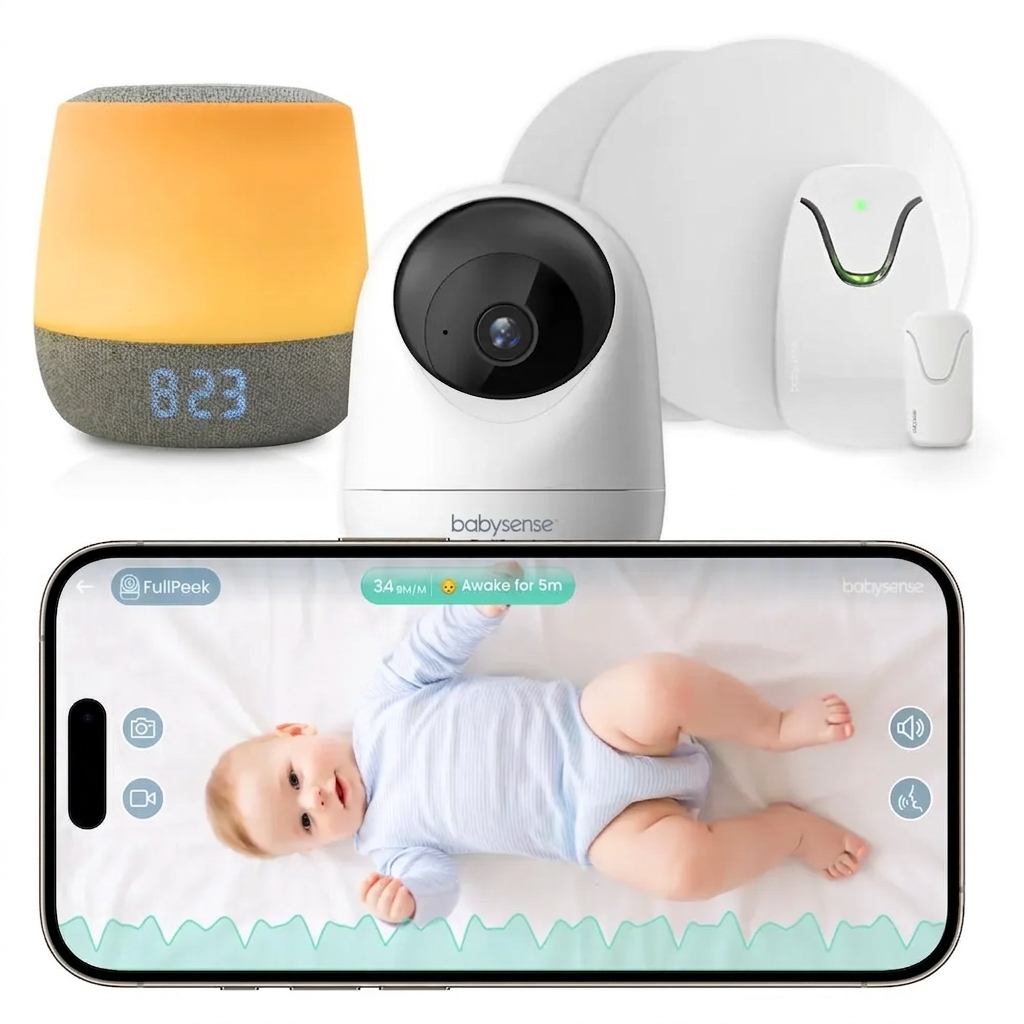
When Should Babies Sleep in Their Own Room? AAP Age Guidance
It’s natural to wonder whether babies can sleep in their own room from birth. Both the AAP and the CDC say to keep your newborn close, on their own sleep surface such as a crib, bassinet, or play yard [1][2]. The AAP also found no specific evidence for when an earlier move to a separate room is safe [1].
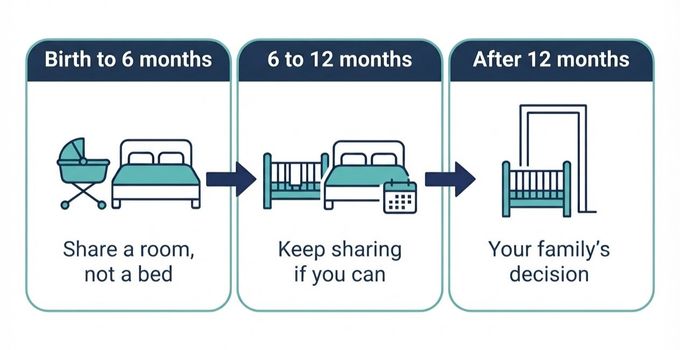
Here's how that looks by age:
Age | AAP Guidance | What to Consider |
|---|---|---|
Birth to 6 months | Share a room, not a bed, on a separate infant sleep surface | Risk of sleep-related deaths is highest now, so room sharing matters most |
6 to 12 months | Keep sharing a room through the first year | Ask your pediatrician before moving earlier |
After 12 months | No specific room-sharing guidance given after the first year | It's your decision, but the basic safe-sleep steps still apply |
Many families move sooner, though. In one 2017 study of first-time mothers, about 62% of babies were sleeping in their own room by 4 months [3]. If you're thinking about it, talk with your pediatrician first, especially if your baby was born early or with a low birth weight [1].
Do Babies Sleep Better in Their Own Room?
Many parents assume babies sleep better in their own room. Few studies have tested it, so one 2017 study does most of the talking. Here's what it found, where it clashed with the AAP, and why the AAP didn't budge.
What the 2017 INSIGHT Study Found
Researchers followed about 230 first-time mothers and their babies in the INSIGHT study [3][4]. They sorted the babies into three groups: own room by 4 months, own room between 4 and 9 months, and still sharing a room at 9 months. They reported the following:
- At 4 months, total overnight sleep was much the same in every group [4].
- By 9 months, babies who moved to their own room by 4 months slept about 40 minutes longer each night than babies still sharing a room [3].
- By 30 months, babies who had moved to their own room before 9 months slept about 45 minutes longer each night than babies who were still sharing [3].
- Parents who shared a room were about four times more likely to bring their baby into their own bed, at both 4 and 9 months [3].
- Babies who shared a room were more likely to sleep with pillows, blankets, or similar items at 4 months [3].
The researchers argued the AAP should revisit its room-sharing advice until stronger evidence backs it [4].
Where the Study Differs From the AAP's Advice
The AAP states that babies sleeping in their parents' room, on a separate surface, can lower their risk of sudden infant death syndrome (SIDS) by as much as 50% [1]. It also says that babies in a separate room were 2.75 to 11.5 times more likely to die suddenly and unexpectedly [1].
For these reasons, the AAP recommends babies should sleep in the same room as parents, without sharing a bed, for at least the first six months [1].
So, why does the INSIGHT study differ from the AAP? The main reason is that the two sides are measuring different things. The INSIGHT study tracked how long babies slept. The AAP's advice is about preventing sleep-related deaths, including SIDS and suffocation [1].
Why the AAP Didn't Change Its Room-Sharing Advice
The study made headlines, and the AAP responded to it in the same journal. Two things shaped that answer: what the study could actually show, and what the AAP thought explained its results.
What the Study Could and Couldn't Show
The INSIGHT study has its strengths. It followed the same families for two and a half years, which is rare in infant sleep research. But it also has limits worth knowing.
- It measured sleep, not safety: No sleep-related deaths were tracked, so it can't tell you which setup is safer [4].
- It found links, not causes: Babies in their own room slept longer, but the study can't show the room is why [4].
- Families were all similar: Most were white, and few were on low incomes. The results of this limited sample may not carry over to homes without a spare bedroom [4].
How the AAP Task Force Responded
Members of the AAP’s Task Force on SIDS published a commentary alongside the study. Their argument was that the room wasn’t doing the work. At 4 months, the groups didn’t differ in how often babies woke, but in bedtime routines, earlier bedtimes, night feeds, and being fed back to sleep [5].
They were also honest about a gap on their own side. The studies behind the AAP's recommendation never broke the risk down by a baby’s age, so the best time to stop sharing a room is hard to pin down [5]. Even so, the AAP kept its recommendation, and room sharing without bed sharing is still at the center of its 2022 safe sleep guidance [1].
A Note About Babies Sleeping in Your Bed With You
Sharing a room isn't the same as sharing a bed, and the AAP draws a firm line between the two.
A US study of 3,136 sleep-related sudden unexpected infant deaths in nine states found that 64% happened on a shared sleep surface [6]. However, that figure covers all sudden unexpected infant deaths, not just SIDS.
Couches and armchairs are the riskiest places of all. The AAP says sleeping with someone on a couch, armchair, or cushion can raise the risk of infant death by up to 67 times [1].
As a result, the AAP doesn't recommend bed sharing under any circumstances.
How Babies Can Sleep on Their Own Safely
Safe sleep rules stay the same whichever room your baby sleeps in. Here's your 6-point checklist [1]:
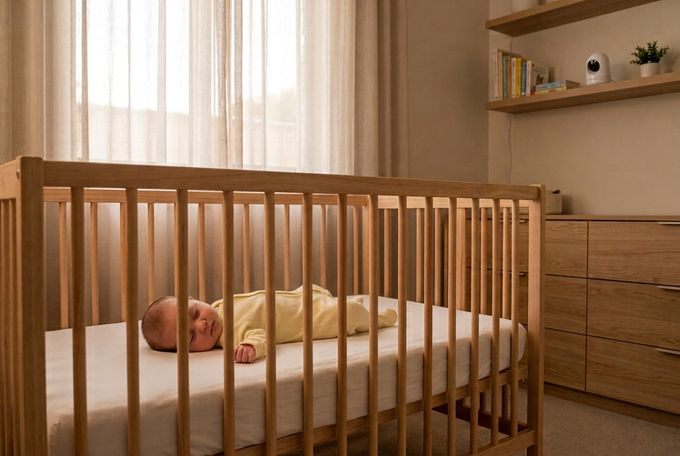
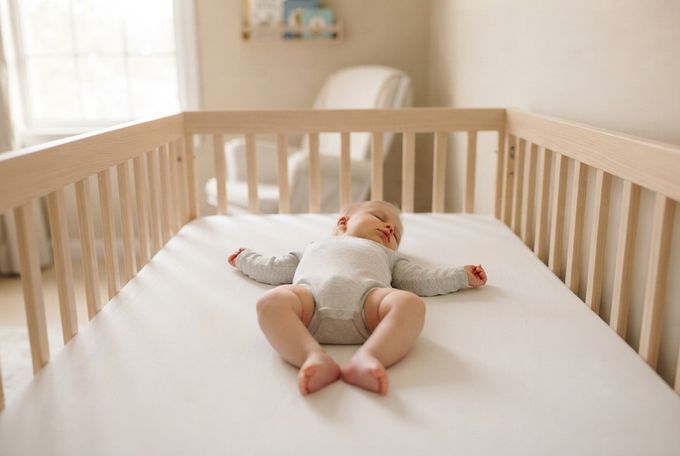
- Surface: Use a firm, flat surface that doesn't tilt. Anything inclined more than 10 degrees isn't safe for sleep.
- Position: Lay your baby on their back for every sleep.
- Crib set-up: Use a tight-fitting crib mattress with a fitted sheet and nothing else. That means no bumpers, blankets, pillows, toys, wedges, or positioners.
- Air: Keep your baby's space smoke-free, during pregnancy and after birth.
- Cords: Keep dangling cords, including window-covering cords, away from the sleep area.
- Clothing: Dress your baby in no more than one layer more than you'd wear [7]. Watch for sweating, flushed skin, or a hot chest, and skip hats indoors.
The AAP doesn't give a specific room temperature, because studies define overheating in different ways [1]. That's why the clothing and overheating checks above matter.
What About Naps?
Naps follow the same rules. The AAP doesn't recommend car seats, strollers, swings, carriers, or slings for routine sleep, especially for babies under four months. If your baby dozes off in one, move them to a crib or another flat surface as soon as it's safe and practical [1].
Other Safe Sleep Advice
A few other things lower the risk of SIDS. Research links feeding your baby human milk to a lower risk, and evidence suggests vaccinations may help protect against SIDS too [1].
Babies born early or with a low birth weight face a higher risk, so ask your pediatrician about the best safe-sleep setup for them [1].
6 Tips for a Good Baby Sleep Routine
A steady routine makes bedtime easier, regardless of the room your baby sleeps in. Here are six tips for settling babies:
1. Have a Relaxing Routine Before Bedtime
Keep it calm, with a quiet bedroom, and the same few steps each night [8]. A bath, a feed, a bedtime story, or a song all work. What matters is a clear last step, so your baby learns it's time to sleep.
2. Make Baby Sleepy, but Not Already Sleeping
Try putting your baby down drowsy but awake [8]. That way, they learn to fall asleep in their crib instead of in your arms. Lay them on their back on a clear sleep surface, so they link sleepiness with that setting.
3. Give Baby Time To Wind Down
Some babies fuss and fight sleep before they settle. If their needs are already met, give them a few minutes before you step in [8].
4. Keep a Pacifier Handy
The AAP recommends offering a pacifier at naps and bedtime, because it helps reduce the risk of SIDS [1]. If you're breastfeeding, wait until your supply, your baby's latch, and their weight gain are all going well.
5. Respect Your Baby's Preferences
Babies have natural sleep rhythms, just like adults. Some settle early, and some are night owls. Work with your baby's rhythm where you can, not against it.
6. Dial Down Nighttime Interruptions
A video monitor lets you check on your baby without walking into the room. Place the camera out of your baby's reach, and keep its cord at least 6 feet from the crib. For night visits, keep the lights dim, your voice low, and your movements slow.
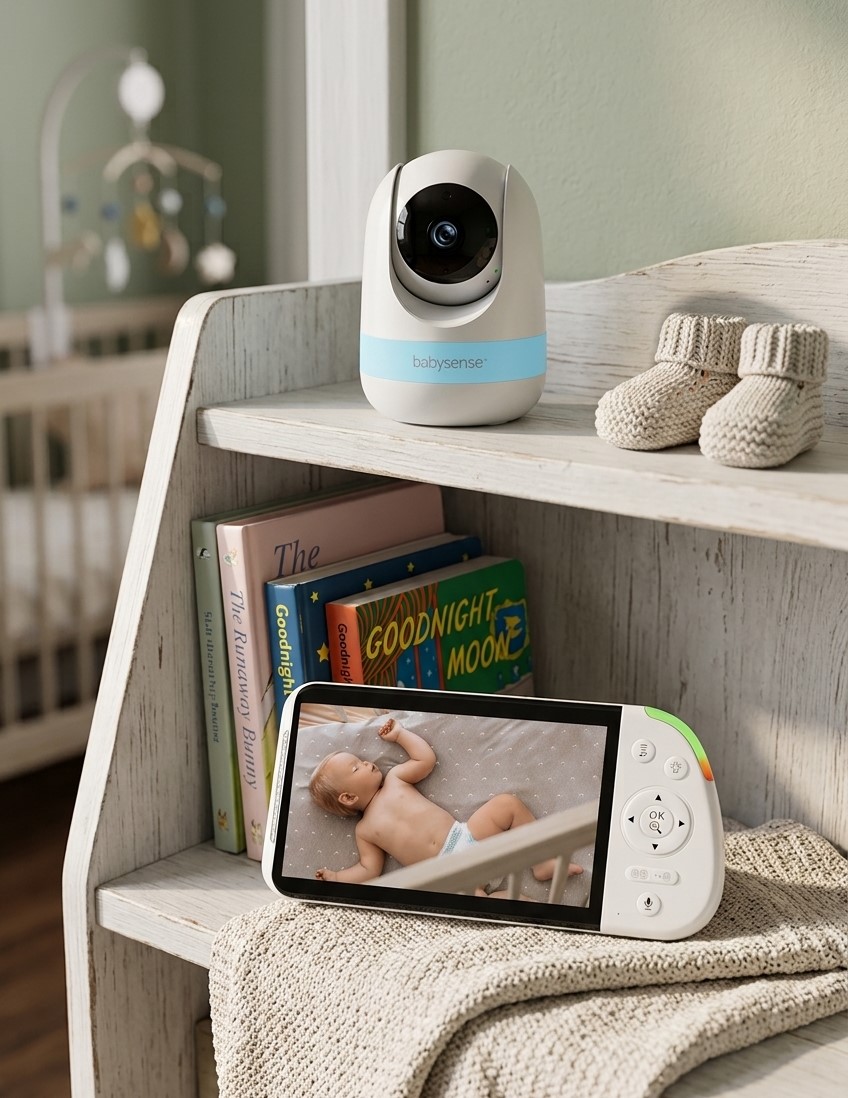
Check on Baby Without Waking Them
See and hear the nursery from your own room with a video monitor.
Choosing a Sleep Setup That Works for Your Family
The AAP recommends keeping your baby in your room, on their own sleep surface, for at least the first six months, and preferably up to a year [1]. Some studies link separate rooms to longer sleep later on, but they haven't changed that advice. Talk with your pediatrician about what fits your baby, and trust yourself on the rest.
Whichever setup you choose, a baby monitor can take some of the effort out of night checks. Babysense non-Wi-Fi video monitors with two or more cameras give you a split-screen view using a local connection, while our smart Wi-Fi monitors let you check in from your phone.
If you'd like a simple and affordable way to monitor your baby from your own room, the HD S2 is a good place to start.
References
1. Moon, R. Y., Carlin, R. F., Hand, I., & the Task Force on Sudden Infant Death Syndrome and the Committee on Fetus and Newborn. (2022). Sleep-related infant deaths: Updated 2022 recommendations for reducing infant deaths in the sleep environment. Pediatrics, 150(1), Article e2022057990. https://doi.org/10.1542/peds.2022-057990
2. Centers for Disease Control and Prevention. (2024, September 17). Providing care for babies to sleep safely. https://www.cdc.gov/sudden-infant-death/sleep-safely/index.html
3. Jenco, M. (2017, June 5). Study: Mother-infant room-sharing can lead to bed-sharing. AAP News. https://publications.aap.org/aapnews/news/13938/Study-Mother-infant-room-sharing-can-lead-to-bed
4. Paul, I. M., Hohman, E. E., Loken, E., Savage, J. S., Anzman-Frasca, S., Carper, P., Marini, M. E., & Birch, L. L. (2017). Mother-infant room-sharing and sleep outcomes in the INSIGHT study. Pediatrics, 140(1), Article e20170122. https://doi.org/10.1542/peds.2017-0122
5. Moon, R. Y., & Hauck, F. R. (2017). Are there long-term consequences of room-sharing during infancy? Pediatrics, 140(1), Article e20171323. https://doi.org/10.1542/peds.2017-1323
6. Schnitzer, P. G., Covington, T. M., & Dykstra, H. K. (2012). Sudden unexpected infant deaths: Sleep environment and circumstances. American Journal of Public Health, 102(6), 1204–1212. https://doi.org/10.2105/AJPH.2011.300613
7. Moon, R. Y. (2026, September 11). How to keep your sleeping baby safe: AAP policy explained. HealthyChildren.org. https://www.healthychildren.org/English/ages-stages/baby/sleep/Pages/a-parents-guide-to-safe-sleep.aspx
8. Mayo Clinic Staff. (2026, January 21). Helping baby sleep through the night. Mayo Clinic. https://www.mayoclinic.org/healthy-lifestyle/infant-and-toddler-health/in-depth/baby-sleep/art-20045014
FAQs
Does a newborn have to sleep in the same room as me?
The AAP recommends that your baby sleeps in your room, close to your bed but on their own infant sleep surface. This is ideally for at least the first six months [1]. If you're wondering whether a newborn can sleep in their own room, the AAP's advice is to keep them close at first. It's guidance, not a rule, so talk with your pediatrician about what works for your family.
Do babies sleep better in their own bed?
There’s no clear evidence that babies sleep better in their own bed, since the studies in this area compare rooms rather than beds. The safety side is clearer. The AAP doesn’t recommend bed sharing under any circumstances, and says your baby needs their own firm, flat sleep surface, whichever room it sits in [1].
How can I help my baby settle into their own room?
Stick to a familiar baby routine, with the same bedtime steps and sleep cues, so the only thing that changes is the room. Use the same dim lighting and calm voice you'd use at home. Give your baby a few nights to adjust, and talk with your pediatrician if you're worried about how they're sleeping.
Do I need a baby monitor if my baby sleeps in another room?
Whether you need a baby monitor is a personal call. A monitor lets you see and hear your baby from another room, so you can check in without getting up. It doesn't replace safe sleep practices, and no monitor can promise to prevent SIDS.
Where should I put the baby monitor camera in the nursery?
Aim for a clear view of the whole crib, not just one corner. A shelf or wall mount above crib height usually works best. Keep the camera and its cord out of your baby’s reach, with the cord at least 6 feet from the crib. Never attach it to the crib itself, and always follow your specific model’s own instructions too.